
Web3 CRMs Explained: Features, Use Cases, and Why It Matters for Crypto

Key Takeaways
A Web3 CRM (also called Wallet Relationship Management software) uses wallet addresses as the primary user identifier instead of emails or phone numbers, preserving pseudonymity while enabling relationship tracking.
Traditional CRMs don’t work in crypto because they require PII that most onchain users never provide. Wallet addresses are the only persistent, reliable identifier available across DeFi.
Five core features define a Web3 CRM: onchain data integration, wallet segmentation by behavior and holdings, multi-chain compatibility, smart filtering and tagging, and churn detection via wallet inactivity.
Core use cases include segmenting DeFi users by activity level, running re-engagement campaigns for at-risk wallets, and tracking lifecycle stages from new wallet to power user to churning.
DeFi apps, crypto neobanks, prediction markets, and marketplaces use web3 CRMs to segment users by onchain behaviour, automate re-engagement, and grow retention and revenue per wallet.
In crypto and DeFi, onchain user data is fragmented. Wallet interactions happen onchain while user journeys often start offchain. This fragmentation creates major blind spots in understanding real user engagement. Legacy web2 CRM tools can only take you so far.
A Web3 CRM gives brands a complete view of wallets, email addresses, token holdings, and onchain behavior. By connecting onchain actions with offchain engagement, you turn fragmented data into actionable segments, re-engagement triggers, and revenue attribution and real impact. DeFi apps, crypto neobanks, prediction markets, and marketplaces use web3 CRMs to segment users by onchain behaviour, automate re-engagement campaigns, and grow retention and revenue per wallet.
In this article, we’ll dive into what a Web3 CRM is, its key features, benefits, use cases, and how teams use it for segmentation, retention, and revenue attribution.

What is a web3 CRM?
A Web3 CRM, also known as a Wallet Relationship Management (WRM) software, is a customer relationship management platform built to track and manage interactions with Web3 users. Unlike traditional CRMs that depend on personal identifiers such as emails or phone numbers, Web3 CRMs use wallet addresses to uniquely identify users, monitor their onchain activity, and engage with them while preserving privacy.
Traditional CRM tools struggle to adapt to the pseudonymous nature of Web3 users. Web3 CRMs are built specifically to meet these unique needs.
Challenges of Traditional CRM in Web3
Traditional CRM systems face major challenges when applied to the Web3 world:
1. Lack of Unique Identifiers
Traditional CRMs rely heavily on personal data such as emails and phone numbers to track users. In Web3, users engage with decentralized applications (dApps) through wallet addresses: pseudonymous identifiers that don’t reveal personal information.
2. Privacy Concerns
Web3 users prioritize privacy and often avoid sharing personal details. With limited data available, traditional CRMs can’t collect or organize profile data effectively, leaving gaps in audience understanding and engagement.
3. Cross-Channel Tracking Issues
In Web3, users interact across offchain channels and multiple chains without clear consistent identifiers. Traditional CRMs struggle to connect these fragmented actions into a single customer journey. A Web3 CRM often handles identity stitching from fragmented offchain and onchain data.
4. Data Inaccuracy
Traditional CRMs often pull from third-party databases that can be outdated or unreliable. In contrast, Web3 CRMs tap directly into onchain activity with data that’s immutable, verifiable, and tied to the user’s wallet behavior. You get deterministic data instead of a probabilistic guess.
Simply put, traditional CRMs:
Can’t read or analyze onchain data.
Miss critical behaviors such as wallet balances and onchain interactions.
Treat users as passive consumers, rather than active Web3 stakeholders.
Key Features of Web3 CRM
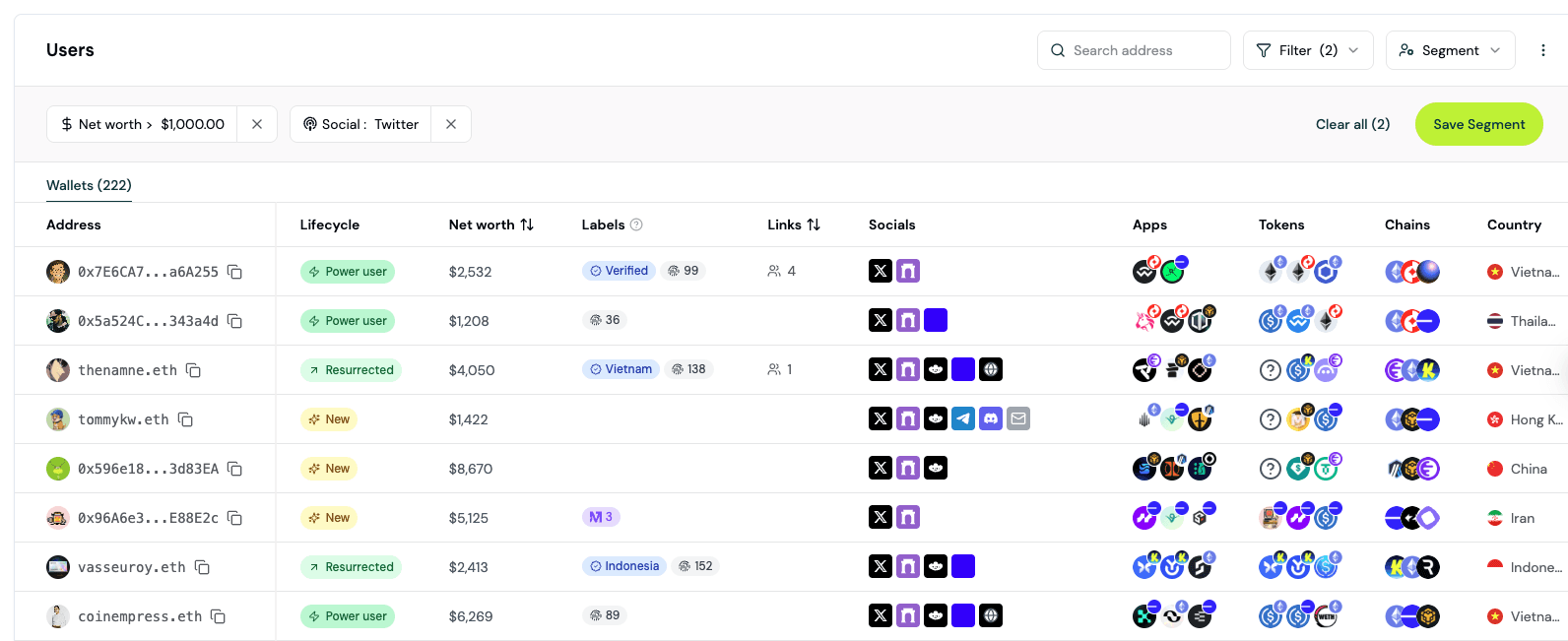
Web3 CRMs are built to address the unique challenges of crypto and DeFi: pseudonymous users, multi-chain activity, and token-based engagement. Core features include:
Onchain Data Integration: Track onchain activity, token transfers, and wallet age in real time.
Wallet Segmentation: Identify your most active, loyal, and high-value users based on their onchain behavior.
Smart Filtering & Tagging: Organize users with customizable labels, tags, and dynamic filters for easier targeting and insights.
Multi-Chain Compatibility: Monitor user activity across multiple chains such as Ethereum, Solana, Base, and more — all in one place.
Churn Detection: Spot early signs of churn by tracking when users withdraw assets or become inactive.
Who Needs a Web3 CRM?
You might think Web3 CRMs are only for crypto startups, but today they’re becoming critical across the entire Web3 landscape.
1. Prediction Markets
Prediction markets use Web3 CRMs to track user interactions across markets and monitor marketplace behavior. With onchain insights, they can send targeted campaigns, promotions, and loyalty rewards. Web3 CRMs reveal everything from buying patterns (volume, revenue) to how long users stay (week-on-week retention.)
2. Decentralized Finance (DeFi) apps
Which wallets provide the most liquidity? Who’s actively trading? Web3 CRMs make sense of these complex interactions by tracking staking, lending, and borrowing behaviors. This enables crypto neobanks and DeFi protocols to personalize product offerings, design better incentives, and optimize the user experience.
3. DAOs
DAOs use Web3 CRMs to manage governance participation and reward users for voting, submitting proposals, and contributing to the community. With better engagement tracking, DAOs can strengthen community loyalty and encourage more active participation.
4. Gaming Apps
Gaming platforms rely on Web3 CRMs to monitor in-game purchases, asset ownership, and player activity. These insights help personalize player experiences, boost retention, and provide a complete view of the gaming ecosystem.
5. Consumer Apps
Launching a new DApp or expanding your app into Web3? Web3 CRMs connect your customer base to your Web3 functionality, enabling seamless experiences across chains. You can trigger personalized actions based on onchain activities such as staking, asset purchases, or event participation.
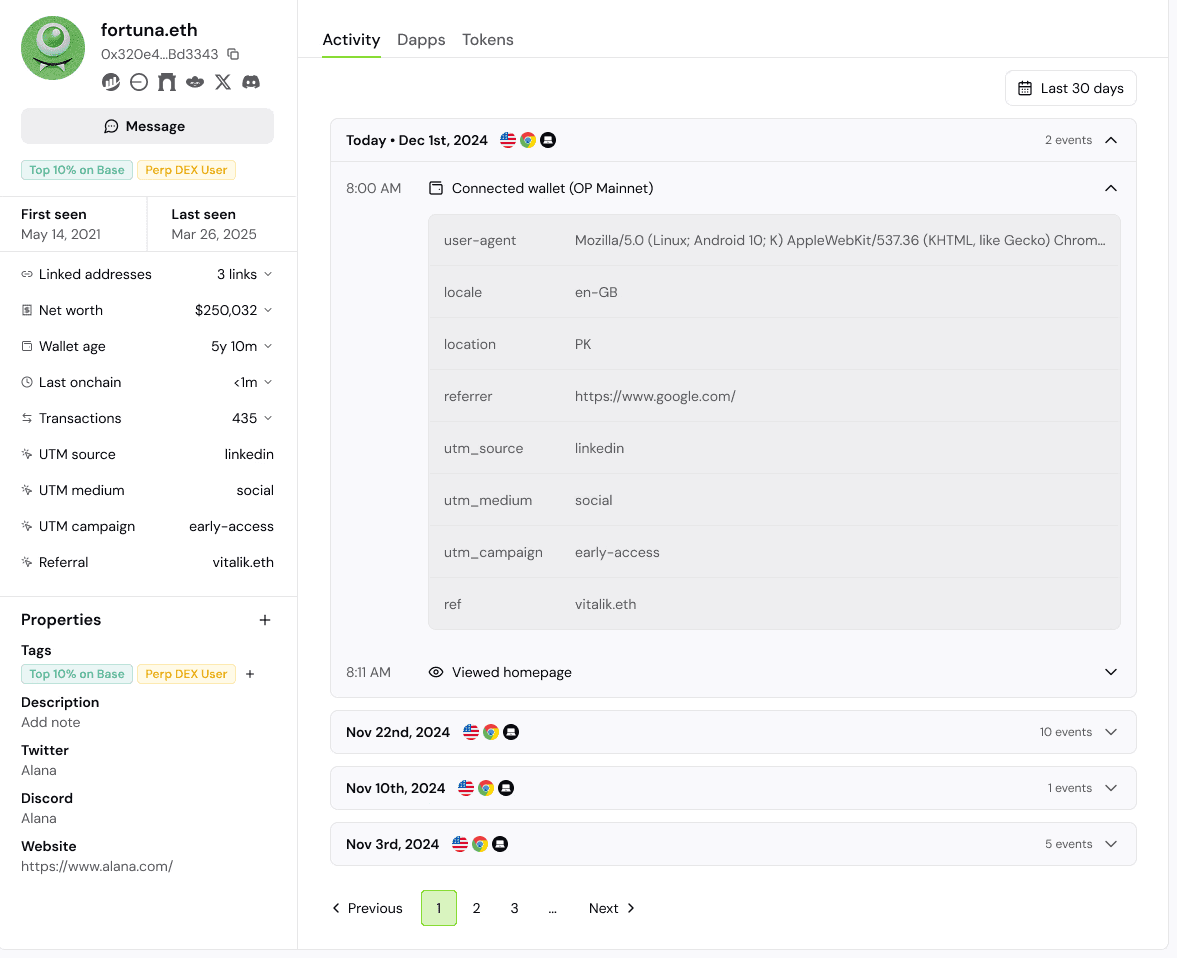
Different teams have different needs. Web3 CRM helps everyone work smarter, engage deeper, and drive better results.
Benefits of Using a Web3 CRM
Web3 CRMs give teams concrete advantages in day-to-day work. Here is where they matter most:
Marketing & Growth Tools
Targeted Marketing
Launch highly targeted campaigns based on wallet holdings and behavior-triggered actions, such as rewarding consistent engagement. Instead of guessing who your power users are, you can identify and nurture them based on real onchain activity.
User Acquisition & Retention
By tracking engagement patterns, you can detect early signs of churn, such as a previously active wallet going quiet. With these signals, you can step in with timely, personalized outreach that brings users back before they drift away.
Community-Centric Features
Data Visibility
Gain unmatched insight into how your community interacts with your project, both onchain and offchain. Curious which wallets consistently attend token-gated events? Web3 CRMs surface those patterns instantly.
Community Management
Identify your most valuable community members by tracking wallet reputation scores. Reward and nurture them to deepen loyalty and encourage continued engagement.
Integration & Communication
Collaboration Tools
Find the right partners by mapping community overlaps. Instead of relying on guesswork, you can see exactly where your most engaged users are active, surfacing concrete co-marketing and integration partners with aligned projects.
Direct Wallet Messaging
Reach your users directly through wallet-to-wallet messaging, paired with rich context about their onchain actions. Build stronger relationships, drive more engagement, and make every conversation count.
Web3 CRM Use Cases
User Acquisition & Community Growth
Marketing spend alone isn’t enough, you need to find, reach, and convert users who will actually engage. Web3 CRMs make this possible with targeted, Web3-native strategies. By capturing onchain activity, teams can segment users based on behavior, run precision campaigns, and engage directly via wallet messaging. With real-time insights and Web3 user targeting, Web3 CRMs transform fragmented outreach into focused, meaningful growth.
User Engagement & Retention
Web3 CRMs help you design smarter engagement strategies powered by real onchain data. By using wallet profiles to identify loyal members, you can keep your community active and involved. The result? Stronger, more vibrant communities and built not on assumptions, but on clear, data-driven actions.
User Retargeting & Re-engagement
Losing community members means losing momentum. Web3 CRMs help you detect early signs of churn, such as token sales or wallet inactivity, and act fast. With direct wallet messaging, targeted incentives, and personalized re-engagement campaigns, you can bring users back before they disappear for good. Plus, collecting feedback from churned users turns every setback into an opportunity for a more impactful marketing strategy.
Web3 CRMs bridge the gap between onchain activity and traditional user touchpoints. Web3 customer relationship management platforms enhance data accuracy, provide deeper insights, and build trust and loyalty. Formo empowers teams to understand, engage, and grow their communities with wallet-intelligent tools and onchain insights. By transforming scattered data into actionable insights, Formo helps projects scale smarter and faster. Master the user journey today, and double your revenue tomorrow.
Frequently Asked Questions
What is a Web3 CRM?
A Web3 CRM is a customer relationship management platform designed to track and manage interactions with Web3 users. It uses wallet addresses as the primary identifier instead of emails or phone numbers, enabling teams to monitor onchain activity, segment users by behavior, and engage them across multiple chains while preserving privacy.
How is a Web3 CRM different from a traditional CRM?
Traditional CRMs rely on personal identifiers like emails and phone numbers, which don’t work well in Web3’s pseudonymous environment. A Web3 CRM integrates directly with onchain data, tracks wallet activity across multiple blockchains, supports identity stitching between offchain and onchain touchpoints, and uses deterministic blockchain data rather than probabilistic third-party databases.
Who needs a Web3 CRM?
Web3 CRMs are used by DeFi protocols, crypto neobanks, prediction markets, marketplaces, and consumer apps expanding into crypto. Any project that needs to understand, segment, and engage users based on wallet activity and onchain behavior can benefit from a Web3 CRM.
What are the key features of a Web3 CRM?
Core features include onchain data integration for real-time tracking, wallet segmentation based on behavior and holdings, smart filtering and tagging for audience targeting, multi-chain compatibility across networks like Ethereum, Solana, and Base, and churn detection that flags when users withdraw assets or become inactive.
How does a Web3 CRM help with user retention?
A Web3 CRM detects early signs of churn by monitoring wallet behavior, such as declining activity or token withdrawals. Teams can then trigger personalized re-engagement campaigns, send direct wallet messages, and offer targeted incentives to bring users back before they leave permanently.
Can a Web3 CRM track users across multiple blockchains?
Yes. Web3 CRMs offer multi-chain compatibility, allowing teams to monitor wallet activity across chains like Ethereum, Solana, Base, and others from a single platform. This gives a unified view of user behavior regardless of which network they interact on.


