
Best Google Analytics Alternatives for Web3 and Crypto Projects

Key Takeaways
GA4 cannot access onchain data or track wallet interactions making it structurally unsuitable for Web3 projects where the source of conversion truth is a crypto wallet rather than a form submission or cookie.
Web3 analytics alternatives track the full offchain to onchain journey connecting UTM-tagged acquisition sources to wallet connections, smart contract interactions, and transaction completions in a single view.
Each Web3 analytics alternative differs in primary strength so teams should match tools to their use case, whether that is dApp product metrics, onchain attribution, social intelligence, or AI-powered user persona building.
While GA4 can be a useful tool for Web2, Web3 requires a more tailored approach to Web3 product and user analytics.
Formo is a Web3 product analytics platform that unifies offchain and onchain data in a single view, using wallet addresses as the persistent user identifier instead of cookies or account emails.
If you’re running a dapp or DeFi protocol and using Google Analytics, you’re missing the most important half of your data. GA4 was built for websites with user accounts and session cookies. It can tell you how many people visited your landing page — but the moment a user connects their wallet, GA4 goes blind. It cannot see wallet connections, token swaps, transaction confirmations, or any on-chain event.
For Web3 user journeys, the conversion that matters isn’t a form submission or a purchase: it’s an on-chain transaction. Measuring that requires tools that span both worlds: the offchain browser session and the onchain transaction record.
This article compares the top four Google Analytics alternatives built for Web3 projects: Formo, Safary, and Cookie3 covering what each one does, who it’s best for, and how to choose.

Web3 projects face unique challenges as Google Analytics doesn’t fully address decentralized needs
What is Google Analytics (GA4)?
Google Analytics 4 (GA4) is Google’s latest analytics platform, introduced in October 2020. It features an event-based data model, cross-platform tracking, and enhanced privacy measures, making it ideal for traditional Web2 environments.

Google Analytics is a web analytics tool that helps you understand how people use your website or app
Is Google Analytics (GA4) suitable for Web3 and crypto?
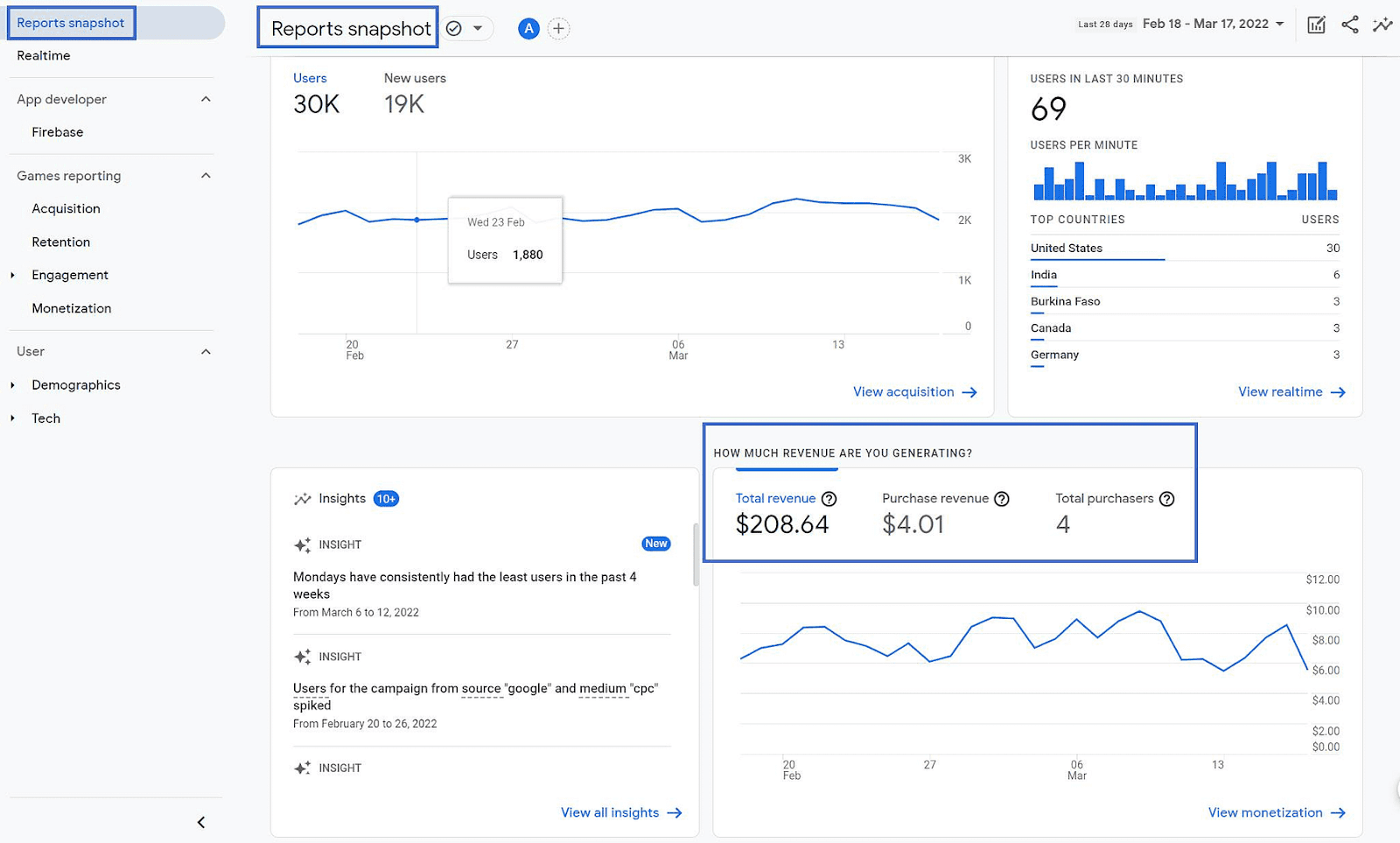
GA4 is built around three assumptions that don’t hold in Web3: users have accounts, identity is tied to a browser cookie, and conversions happen in the browser. In a dapp, users are identified by wallet address not email, there are no accounts to log in to, and the conversion (the transaction_ happens on-chain outside the browser entirely.
This isn’t a configuration problem you can work around with custom events. GA4 structurally cannot access blockchain data, which means it captures at most the top-of-funnel visit and misses everything that happens after wallet connect.
In summary, while GA4 excels in Web2, it has limitations when applied to Web3, including:
GA4 primarily relies on cookies, user accounts, and traditional data collection. In Web3, user activity and data happen on the blockchain, which Google Analytics cannot directly access or analyze.
GA4 does not support tracking onchain activities (e.g., wallet interactions, staking, minting). Web3 product analytics can handle onchain data directly from Dapps and wallet interactions.
User identities in crypto apps are different from traditional logins. GA4’s user identification system (based on cookies and accounts) doesn’t map well to the Web3 identities (wallets).
Why consider Google Analytics Alternatives?
Web2 analytics tools are ill-suited for web3. A web3 user’s journey involves both offchain and onchain channels making it difficult for teams to identify demographics, user journeys, CAC, and conversion rates. The source of truth for conversions onchain - the crypto wallet - is detached from the web2 channels where user engagement occurs. Any technology that aims to capture where web3 users are coming from and how much they spend or engage will have to span two worlds: offchain and onchain.
Web3 product and marketing teams need tools to capture and analyze both dapp interactions on onchain activity to track Web3 user behavior effectively. Google Analytics alternatives empower teams to:
Monitor wallet interactions.
Track onchain activity across multiple blockchains.
Optimize hybrid Web2/Web3 experiences.
While GA4 can be a useful tool for Web2, Web3 requires a more tailored approach to Web3 product and user analytics.
Top Google Analytics alternatives for Web3
Here are the top Google Analytics alternatives designed for Web3 teams:
Formo
Formo is a Web3 product analytics platform that unifies offchain and onchain data in a single view, using wallet addresses as the persistent user identifier instead of cookies or account emails.
What it tracks: Formo captures front-end events (page views, button clicks, wallet connect attempts) via a JavaScript SDK alongside on-chain events (transaction submissions, confirmations, contract calls, failures) indexed from the blockchain. Both streams are attributed to the same wallet address, giving product and growth teams a complete picture of the user journey from first visit to on-chain conversion.
Onchain attribution is one of Formo’s core differentiators. UTM campaign parameters are linked through to wallet-level outcomes, so teams can see which acquisition channels actually produce wallets that transact not just wallets that connect. This is the Web3 equivalent of revenue attribution in traditional analytics.
Segmentation lets teams filter by wallet type, chain, token holdings, geography, and transaction history, enabling cohort analysis at a level of specificity that cookie-based tools can’t approach.
Main features: Wallet-level funnel analysis, onchain attribution, cohort segmentation, real-time activity feed, cross-chain user tracking, DAU/WAU/MAU and retention metrics
Pricing: $249/month, $499/month with a 14-day free trial
Best for: DeFi protocols, DEXs, and dapp teams that need product analytics and growth attribution across the full offchain-to-onchain user journey
Cookie3
Cookie3 is a KOL analytics platform for Web3 that uses AI and onchain data to build user personas and segment audiences. It is positioned toward teams that want to combine traditional web behavioral signals with on-chain identity data for personalization and targeting.
What it tracks: Cookie3 combines web analytics with onchain data and KOL (key opinion leader) intelligence to help teams understand not just what users do but what type of users they are. Its AI-powered persona building is aimed at teams running crypto-native marketing campaigns.
Main features: Web analytics, onchain explorer, token analytics, KOL intelligence, AI-powered user personas
Pricing: $299/month, $749/month, $600/month KOL addon
Best for: Web3 marketing teams focused on audience intelligence, influencer analytics, and AI-driven user segmentation
Safary
Safary is a Web3 marketing analytics and attribution platform focused on connecting offchain acquisition sources to onchain conversion events. Its primary use case is helping growth and marketing teams understand which campaigns, partners, and channels are driving wallets that actually transact.
What it tracks: Safary links UTM-tagged traffic sources to wallet connect events and on-chain conversions, enabling campaign-level ROI measurement for Web3 growth teams. It provides crypto user profiling to help teams understand the demographic and behavioral composition of their acquired users.
Main features: Onchain conversion tracking, campaign attribution, crypto user profiles, partner tracking
Pricing: 7-day free trial, >$1,000/month
Best for: dApps and DeFi protocols with active paid or partnership-driven growth programs that need to attribute onchain activity back to acquisition spend
Comparison Table
Formo | Safary | Cookie3 | |
|---|---|---|---|
Primary use | Product analytics + attribution | Marketing attribution | Audience intelligence |
Front-end event tracking | Yes | Yes | Yes |
On-chain data | Yes | Limited | Limited |
Funnel analysis | Yes | Limited | No |
Onchain attribution | Yes | No | No |
Product analytics | Yes | No | No |
Contract events tracking | Yes | No | No |
Ask AI & MCP | Yes | No | No |
KOL intelligence | No | No | Yes |
API | Yes | No | No |
Starting price | $249/mo | $1000/mo | $299/mo |
Best for | Product + growth teams | Growth + marketing teams | Marketing + content teams |
Key Features of Web3 Product Analytics Tools
A good Web3 product analytics tool should offer a range of features designed to track user behavior and interactions both onchain and offchain Here’s a breakdown of key Web3 analytics features:
Web / Visitor Analytics
Tracks who is coming to your site and what they do before connecting a wallet. This includes page views, session duration, device type, geography, UTM source channels, and which wallet types users connect. Applying segmentation and filters to this data. For example, filtering by country or wallet type surfaces behavioral differences across user groups that aggregate metrics hide.
Visitor Metrics: Track the number of visitors, URLs visited, wallet connections, converted wallets, transactions, wallet used, unique wallet addresses, session times, wallet types, user countries, devices, and UTM source channels.
Segmentation and Filters: Apply filters to understand how different segments of users interact with your Dapp. For instance, filtering by wallet type or country can help identify user behavior trends in specific regions or demographics.
Automatic Event Tracking: Automatically track page views, button clicks, and other user interactions on your pages. This feature removes the need for manual event designation, although manual tracking can be configured when necessary.
Onchain Attribution
Connects UTM-tagged acquisition sources to on-chain outcomes. When a user arrives from a Twitter ad, connects their wallet, and completes a swap three days later, onchain attribution links those events into a single conversion path. Without it, teams can only see top-of-funnel clicks, not which campaigns actually drove transacting users.
Campaign Performance: Track marketing campaigns using UTM tags to see where traffic is coming from, whether from a specific source, campaign, or medium.
Onchain Tracking: Understand how onchain events (such as transactions or token transfers) are linked to user acquisition sources. This allows for a deeper understanding of user behavior from offchain to onchain conversion, including wallet interactions and engagement with smart contracts.
Funnel Analytics
Maps the user journey from offchain visit through to on-chain conversion, showing where users drop off at each step: visiting, wallet connect, transaction initiation, transaction confirmation. Identifying the biggest drop-off point is the first step to fixing it.
User Journey Insights: Gain visibility into user funnels, tracking how offchain visitors transition to onchain conversions (e.g., from visiting the site to making a transaction or interacting with a smart contract).
Conversion Metrics: Analyze drop-off points and optimize the user experience to drive better conversion rates. Web3 funnel analytics help identify friction in the journey, such as where users abandon their wallets or transactions.
Product Analytics
Tracks the core growth indicators: page visits, sessions, daily and weekly active wallets, wallet connections, and transactions. Tracking these over time and filtering by cohort shows whether your product is growing, retaining users, or bleeding them.
Core Metrics: Monitor key product metrics such as page visits, sessions, Daily Active Users (DAU), Monthly Active Users (MAU), wallet connections, and transactions.
Active Users: Display the number of active users, including daily/weekly/monthly active users and active wallet addresses, empowering you to understand engagement over time.
User Engagement Trends: Use filters to examine how Web3 users engage with your Dapp over different periods, which helps to evaluate long-term retention and user growth.
Summary
The right Google Analytics alternative for your Web3 project depends on what questions you’re trying to answer. If you need to understand user behavior across the full dapp funnel, start with a product analytics tool that unifies offchain and onchain data under a single wallet identifier. If you’re primarily optimizing paid acquisition, a marketing attribution tool that tracks campaign-to-wallet conversion is the better fit. The tools above cover the range pick based on your team’s most pressing blind spot.
For a comprehensive solution that tracks both product behavior and marketing performance in crypto, Formo is the go-to choice for leading DeFi teams.
Frequently Asked Questions
What makes a good Google Analytics alternative for Web3?
A good Google Analytics alternative for Web3 puts wallets first. It needs to support on-chain events like swaps or deposits, not just page views. It should also be built for privacy, with no invasive tracking. Look for tools with multi-chain coverage to see user activity everywhere, and flexible integrations to connect with your existing stack.
How is Web3 analytics different from traditional web analytics?
Traditional web analytics tools like Google Analytics measure sessions, page views, and form submissions. Web3 analytics must additionally track wallet connections, smart contract interactions, token transfers, and onchain transactions - all of which happen outside the browser and are invisible to GA4. The core difference is that the conversion event in Web3 is a blockchain transaction, not a form fill, so the analytics layer must span both offchain and onchain data.
Can I use Google Analytics for a dapp or crypto app?
You can use GA4 to track website traffic before a user connects their wallet, but it cannot track anything on-chain. Wallet connections, token swaps, transaction confirmations, and smart contract interactions are all invisible to GA4. For most dapps, this means GA4 misses the core conversion funnel entirely. Web3 teams need analytics tools that use wallet addresses as user identifiers and can index on-chain events directly.
Can Google Analytics track crypto wallets?
No. Google Analytics 4 relies on cookies, session IDs, and browser-based tracking. It has no ability to read wallet addresses, monitor onchain transactions, or link a user’s offchain web session to their blockchain activity. Web3 teams need a purpose-built analytics tool that connects front-end behaviour to wallet-level onchain events across multiple chains.
What is the best Google Analytics alternative for Web3?
Formo offers a free trial that covers web analytics, product analytics, wallet intelligence, and onchain attribution making it the strongest starting point for Web3 teams. Other tools do not.
What integrations are essential for a Web3 analytics tool?
A good analytics tool needs to connect with your entire data stack.
It should ingest onchain events from indexers and support multiple chains.
The tool must connect to your data warehouse and business intelligence (BI) tools for deeper analysis.
Look for reverse ETL capabilities to send audience segments to your activation tools for email, ads, or messaging campaigns.
How do I choose the right analytics tool for my project?
When choosing an analytics tool, evaluate it on several key criteria.
Assess the flexibility of its event model and whether it offers real-time or just historical reporting.
Check query performance, data ownership and export options, and pricing limits.
Finally, review the platform’s reliability, uptime guarantees (SLA), and how easy it is to implement.
What is the difference between Web3 product analytics and Web3 marketing analytics?
Product analytics focuses on in-app behavior: what users do inside your dapp, where they drop off, which features drive retention, and how your core funnel converts. Marketing analytics focuses on acquisition: which campaigns and channels are driving users, what the cost per acquired wallet is, and which sources produce users who actually transact. Tools like Formo cover both; Safary is primarily marketing-focused; Cookie3 spans marketing and audience intelligence.
Do Web3 analytics tools work across multiple blockchains?
Yes. Most Web3 analytics tools support multi-chain tracking by using wallet addresses as cross-chain identifiers. A single wallet active on Ethereum, Base, and Arbitrum is recognized as the same user across all three chains, so you get a unified view of behavior regardless of which chain a transaction occurs on. The depth of cross-chain support varies by tool — check which specific chains each platform indexes before committing.
How do Web3 analytics tools handle user privacy?
Reputable Web3 analytics tools are cookieless by design, since they use wallet addresses rather than browser cookies. Best practice is to hash or anonymize wallet addresses before storing or transmitting them and to avoid combining wallet addresses with personal identifiers. Tools should provide a Data Processing Addendum (DPA) and support GDPR-compliant data handling. Formo’s architecture is privacy-first and does not rely on third-party cookies or invasive tracking methods.


