
Top Web3 Analytics Firms for Onchain Data Insights

Key Takeaways:
Formo focuses on DeFi growth analytics: real-time wallet intelligence, marketing attribution, cross-chain product analytics, and UTM-to-wallet conversion tracking for growth and product teams rather than compliance. This giving DeFi teams actionable wallet-level insights for informed decision-making.
Chainalysis leads in AML, sanctions screening, and risk scoring, offering the Reactor platform to visualize complex transaction flows and identify illicit activity across regulated financial institutions and crypto exchanges.
Dune enables custom SQL dashboards and community-driven DeFi insights based on onchain data.
Blockchain analytics firms like Chainalysis, Glassnode, Nansen, and Dune Analytics have become essential infrastructure for institutions, developers, and investors by transforming public blockchain data into actionable insights for compliance, market intelligence, and DeFi optimization. These platforms excel at transaction tracing, onchain metric analysis, and risk assessment, with capabilities ranging from AML screening and regulatory compliance to smart money tracking and protocol performance monitoring.
The blockchain analytics landscape has exploded with specialized companies providing critical data insights for blockchain networks, DeFi protocols, and digital asset markets. These platforms have become essential infrastructure for institutions, developers, and investors navigating the complex world of decentralized finance and cryptocurrency.
What Are Blockchain Analytics Companies?
Web3 analytics companies are specialized data firms that collect, process, and interpret information from blockchain networks and decentralized applications. Unlike traditional analytics that rely on cookies and tracking pixels, these companies focus exclusively on onchain data – including transaction flows, smart contract interactions, token movements, and network metrics that are publicly available on blockchains.
These companies serve diverse stakeholders across the Web3 ecosystem:
Financial institutions rely on them for compliance monitoring and risk management
DeFi protocols use their insights for optimization and competitive intelligence
Investors and traders depend on their market intelligence for informed decision-making
Developers leverage their tools for performance monitoring and user behavior analysis
The core value proposition lies in transforming raw blockchain data into actionable insights. This requires sophisticated infrastructure and analysis capabilities to extract meaningful patterns from massive amounts of complex, transparent, but often difficult-to-interpret data.
Core Capabilities of Blockchain Analytics Platforms
Transaction Analysis and Flow Tracking
Blockchain analytics platforms excel at tracing cryptocurrency movements across blockchain networks. They map transaction paths, identify wallet clusters through advanced clustering algorithms, and analyze fund flows to detect suspicious activities or understand market dynamics. This capability is crucial for both compliance and investment research.
Market Intelligence and Trading Insights
Leading platforms analyze onchain metrics like active addresses, transaction volumes, and network usage to provide leading indicators of market trends. Companies like Glassnode have pioneered numerous onchain metrics, including realized price and network value to transactions ratio, helping traders and investors make informed decisions based on actual network usage rather than speculation.
DeFi Protocol Analytics
Blockchain analytics companies provide comprehensive tracking of DeFi ecosystem metrics including total value locked (TVL), yield farming opportunities, liquidity pool performance, and cross-protocol interactions. They monitor smart contract performance, identify potential vulnerabilities, and track user behavior patterns to help protocols optimize their platforms and users identify profitable, secure opportunities.
Compliance and Risk Management
Regulatory compliance has become a crucial capability for Web3 analytics firms. They provide sophisticated tools for anti-money laundering (AML) screening, sanctions compliance, and regulatory reporting. Advanced risk scoring algorithms assess compliance risks associated with specific addresses or transactions, helping businesses maintain regulatory compliance while operating in the Web3 space.
Leading Blockchain Analytics Companies
Formo
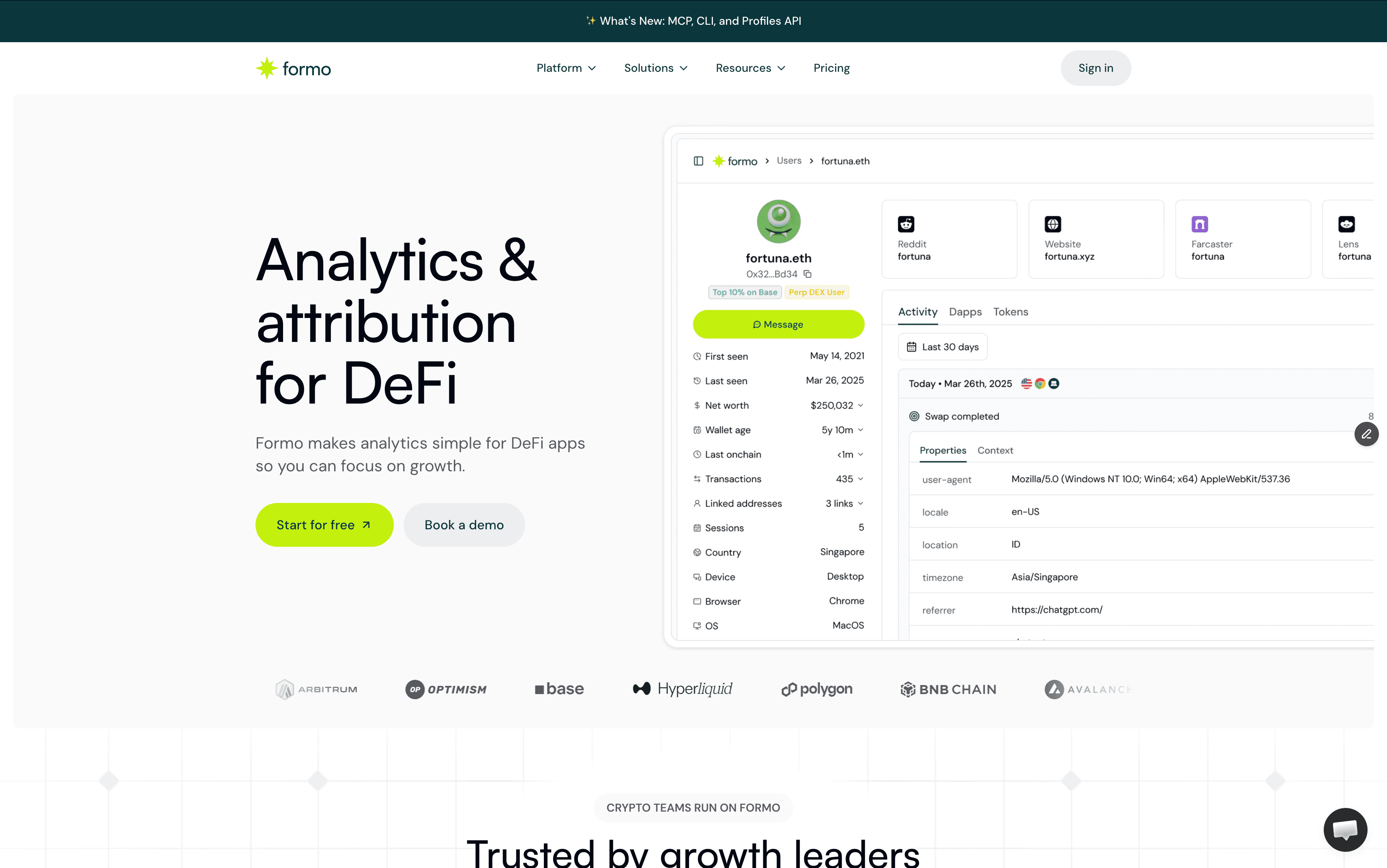
Formo delivers a comprehensive analytics solution combining real-time transaction monitoring, market intelligence, and compliance support. The platform is designed for organizations seeking to navigate the DeFi and crypto landscape with confidence. Formo’s advanced analytics capabilities and intuitive interface make it easier for teams to access actionable insights and make informed decisions.
Chainalysis
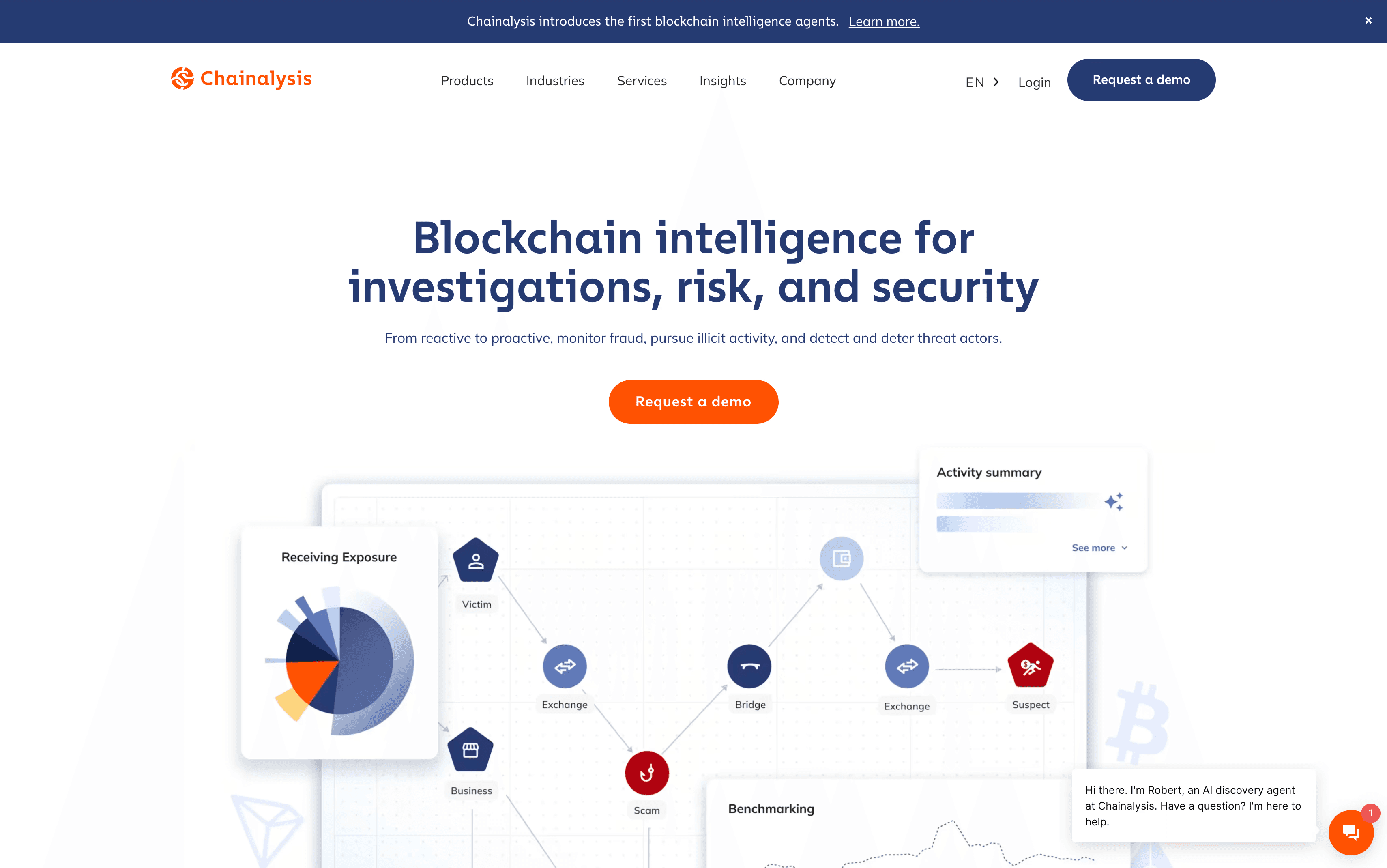
Market leader in compliance and investigation, Chainalysis serves law enforcement agencies and financial institutions with industry-leading AML and sanctions screening capabilities. The company’s strength lies in its comprehensive address labeling and sophisticated risk scoring algorithms, enabling users to identify high-risk transactions with precision.
Key capabilities include:
Real-time transaction monitoring and alerting
Investigation tools specifically designed for law enforcement
Comprehensive compliance solutions for exchanges and financial institutions
The Reactor platform that visualizes complex transaction flows and identifies patterns of illicit activity
Nansen
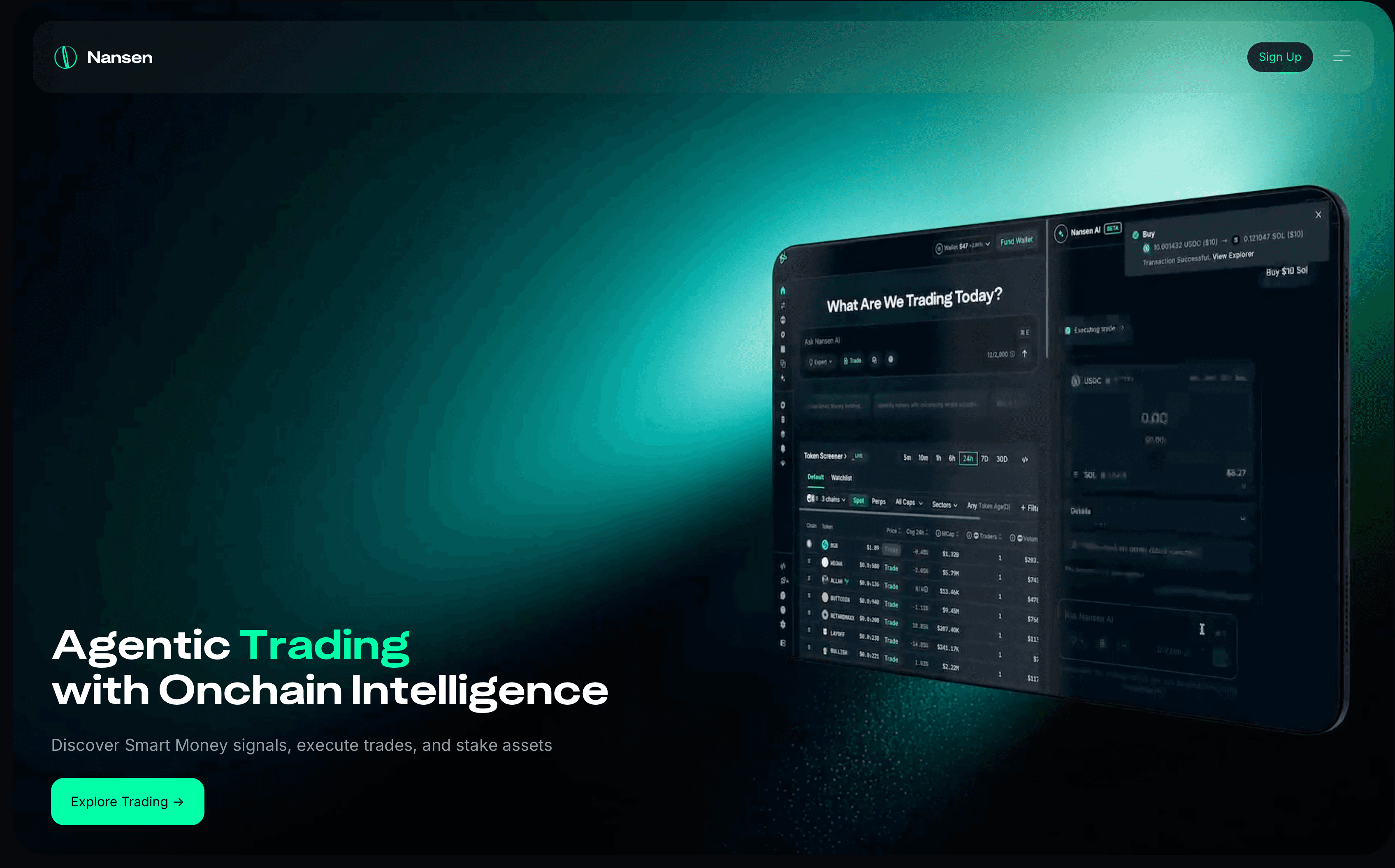
Nansen provides actionable insights for crypto investors and DeFi users by combining onchain data with AI-powered analytics. The platform excels at tracking investment opportunities and “smart money” movements through its sophisticated wallet labeling system that categorizes addresses based on behavior patterns.
Nansen particularly excels in DeFi analytics, providing deep insights into yield farming strategies, liquidity mining opportunities, and cross-protocol interactions. The platform’s Token Paradise feature helps users discover emerging projects based on smart money activity and early adoption patterns.
Dune
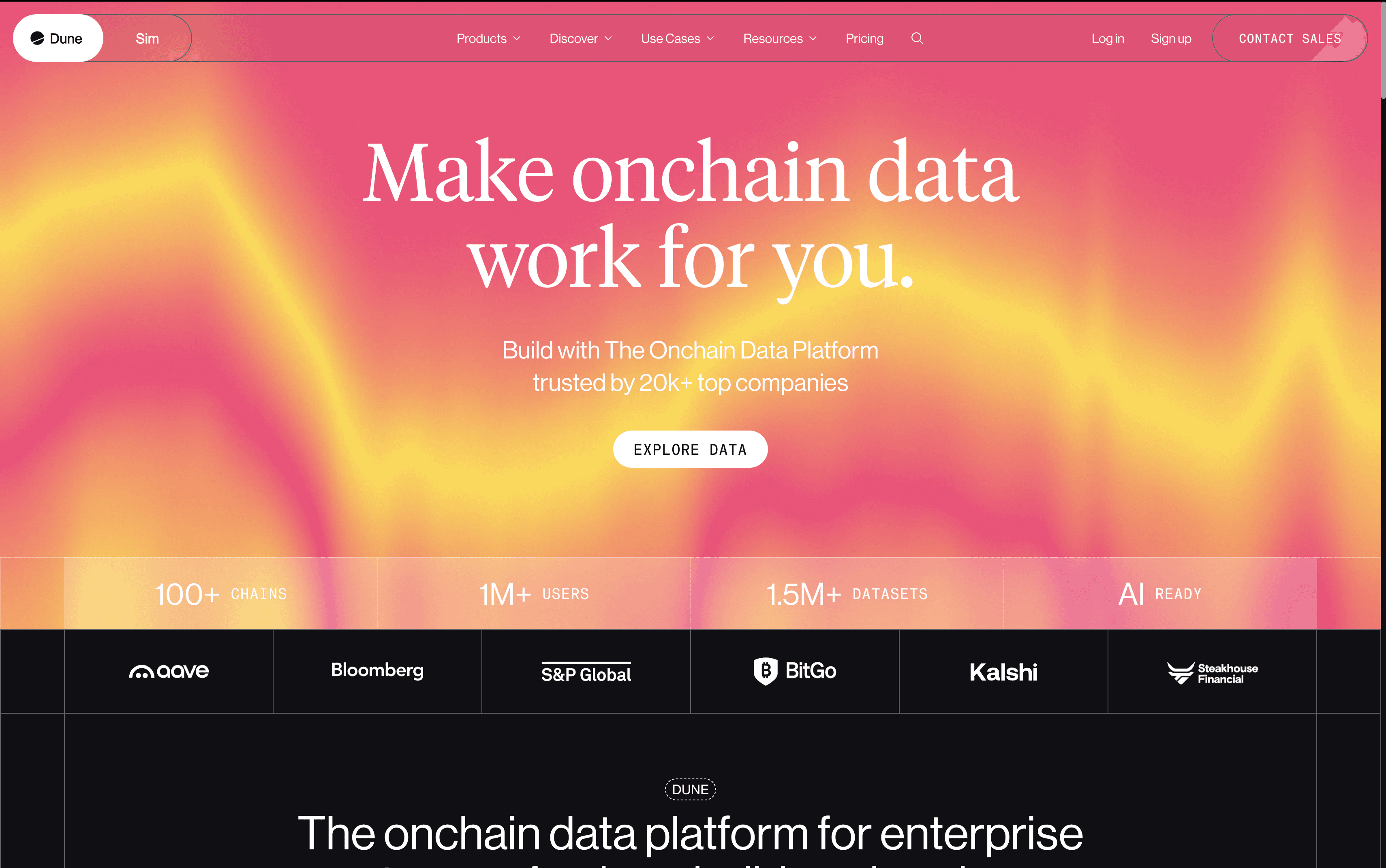
Dune Analytics democratizes blockchain data analysis by providing a platform where users can create custom dashboards and SQL queries. Its flexibility and community-driven ecosystem enable analysts to share insights and collaborate on data exploration, making it a favorite among researchers and analysts.
The platform is particularly popular in the DeFi community, where developers and users create thousands of dashboards to track protocol performance metrics, user adoption, and market trends. Dune’s open approach has resulted in an extensive library of publicly available dashboards covering virtually every aspect of the Web3 ecosystem.
Elliptic
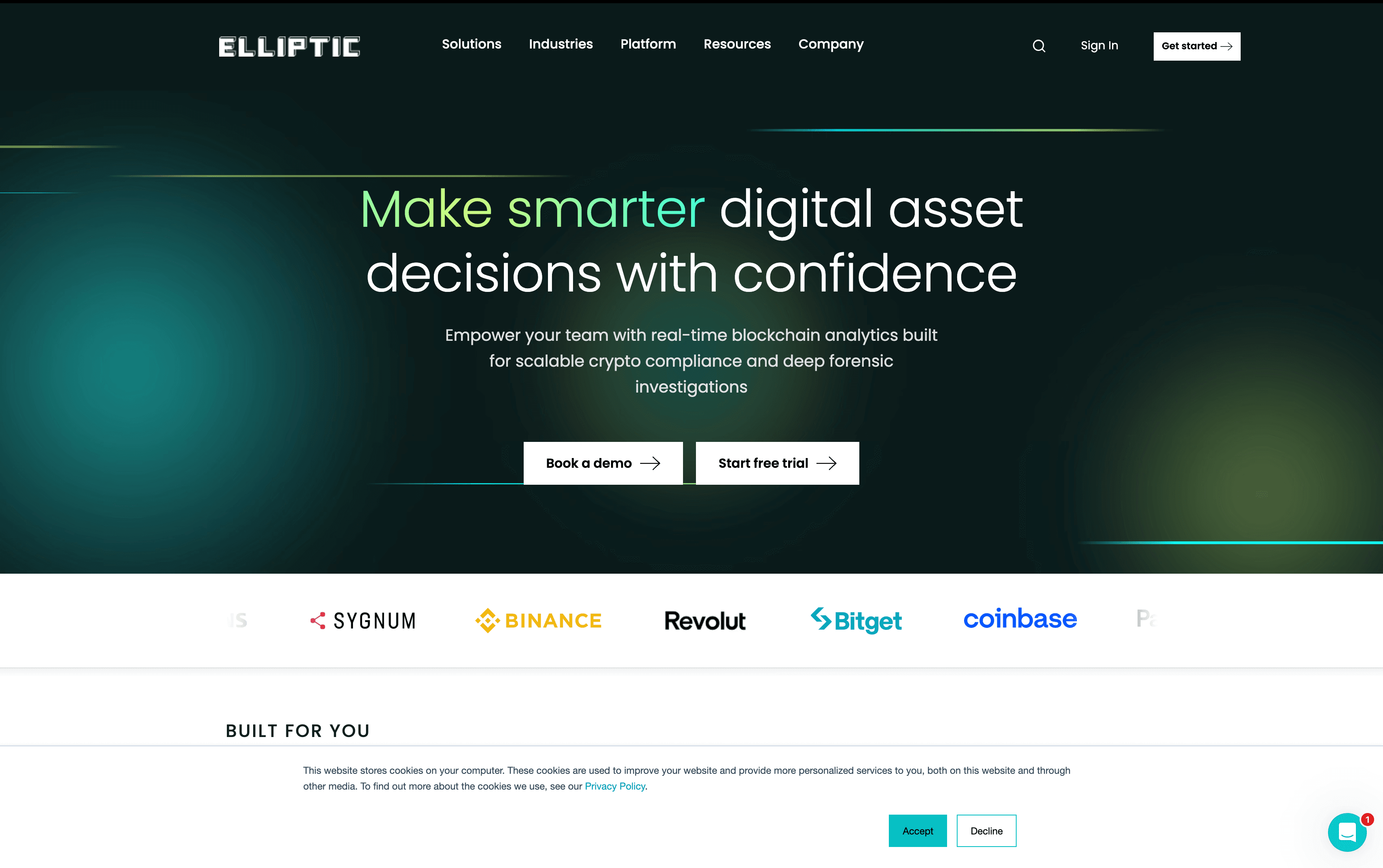
Elliptic specializes in compliance and investigation tools for financial institutions, law enforcement agencies, and cryptocurrency businesses. The platform provides comprehensive AML screening and transaction monitoring capabilities, with investigation tools that help trace illicit transactions and identify criminal networks.
Key capabilities include real-time transaction screening, regulatory reporting tools, and maintaining extensive databases of risky addresses with detailed risk assessments for compliance teams.
Specialized Analytics Segments
NFT Analytics
The explosive growth of non-fungible tokens has created a specialized segment within blockchain analytics. Companies like NFTGo and Icy.tools provide comprehensive NFT market data, including floor prices, trading volumes, and collection analytics.
These platforms track NFT marketplace activities across multiple chains, identify trending collections before they go mainstream, and offer sophisticated tools for investors to analyze market opportunities. Features include rarity analysis, holder distribution tracking, and whale movement monitoring.
Gaming and Metaverse Analytics
Web3 gaming and metaverse projects require specialized analytics that track in-game economies, player behavior, and virtual asset performance. Companies in this segment analyze play-to-earn mechanics, virtual land valuations, and gaming token economics.
These platforms help game developers optimize their tokenomics, track player engagement and retention, and provide insights into the performance of gaming tokens and virtual assets across different metaverse platforms.
Cross-Chain Analytics
As the DeFi ecosystem becomes increasingly multi-chain, analytics companies are developing sophisticated capabilities to track assets and activities across different blockchain networks. This includes bridge monitoring, cross-chain arbitrage opportunities, and comprehensive multi-chain portfolio tracking.
Cross-chain analytics require advanced data integration capabilities and standardized metrics that work across various blockchain architectures, providing users with unified views of their activities and asset movements across the entire Web3 ecosystem.
Choosing the Right Blockchain Analytics Partner
Institutional Requirements
Financial institutions typically require comprehensive compliance capabilities, institutional-grade data quality, and robust API infrastructure. They prioritize platforms with strong regulatory features, enterprise-level support, and proven track records with other financial institutions.
Key considerations include:
Advanced AML screening and sanctions compliance tools
Comprehensive regulatory reporting capabilities
High data reliability and uptime guarantees
Enterprise-grade API infrastructure and integration capabilities
Developer and Protocol Needs
DeFi protocols and blockchain developers need analytics platforms that offer detailed insights into user behavior, protocol performance metrics, and competitive intelligence. They prefer platforms with flexible querying capabilities and comprehensive API access for integration into their own applications.
Important features include:
Real-time data feeds and webhook capabilities
Custom dashboard creation and SQL query access
Seamless integration with development tools and workflows
Historical data availability for backtesting and analysis
Investor and Trader Focus
Individual investors and trading firms prioritize platforms that offer actionable insights, early trend identification, and comprehensive portfolio tracking capabilities. They value intuitive interfaces and clear signal generation that can inform trading decisions.
Key features include:
Smart money tracking and whale movement alerts
Advanced market trend analysis and cycle indicators
Customizable alert systems for significant market events
Access to insights unavailable through traditional market data sources
Frequently Asked Questions
What do blockchain analytics firms do?
Web3 analytics firms transform raw blockchain data into actionable insights for businesses and investors. They index onchain activity across multiple blockchains, enrich it with contextual information, and provide intuitive dashboards to help users understand user behavior, market trends, and protocol performance. Unlike traditional analytics vendors, these firms are wallet-first, support multiple chains natively, and specialize in analyzing protocol-level data to give you a comprehensive picture of Web3 activity.
How do I evaluate blockchain analytics firms?
When selecting an analytics partner, evaluate several key criteria:
Technical capabilities: Review their blockchain coverage, data freshness guarantees, and uptime SLAs to ensure reliability.
Performance and tooling: Assess query performance, available SDKs, SQL access, and API documentation quality.
Integration and security: Examine their integration options, security posture, compliance certifications, and data handling practices to ensure they meet your technical and regulatory requirements.
What are the most common use cases for blockchain analytics?
Blockchain analytics platforms enable comprehensive understanding of the user journey and business performance:
User acquisition: Attribute onchain actions back to specific marketing campaigns and channels to measure acquisition effectiveness.
Activation analysis: Analyze your user activation funnel to identify where new users drop off and optimize conversion rates.
Retention and LTV: Track cohort retention patterns and calculate Lifetime Value (LTV) by user segment to identify your most valuable users.
Risk monitoring: Monitor for suspicious activities, compliance risks, and security threats in real-time.
Competitive intelligence: Benchmark your protocol’s performance against competitors and identify market opportunities.
How important is data ownership and integration?
Data ownership is crucial for maintaining flexibility and control over your analytics infrastructure. Look for firms that offer data export capabilities or warehouse-native models where data resides in your own environment. This ensures you can connect to any business intelligence (BI) tool you prefer and maintain control over your data.
Also prioritize platforms with reverse ETL capabilities that allow you to send audience segments from your data warehouse to activation platforms for targeted marketing campaigns and user engagement.
What privacy and compliance features should I look for?
Choose platforms that prioritize data privacy and offer comprehensive compliance features:
Privacy controls: The platform should support consent management, data minimization principles, and provide a comprehensive Data Processing Addendum (DPA).
Security infrastructure: Ensure data is encrypted both at rest and in transit, with strong access controls, audit logs, and regular security assessments.
Regulatory compliance: Look for regional data hosting options and compliance with regulations like GDPR, CCPA, and other relevant data protection laws in your jurisdiction.
The blockchain analytics industry continues to evolve rapidly, with new capabilities and specialized solutions emerging regularly. Success in selecting the right analytics partner depends on clearly understanding your specific needs and matching them with the platform strengths that best serve your use case in this diverse and growing ecosystem.


