
Which is right for you?
Choose Formo if…
• You need user paths (flows) and retention cohort analysis, beyond a funnel dashboard.
• You want transactions autocaptured instead of sent as manual safary.track() events.
• You want wallet profiles with net worth, DeFi positions, labels, and lifecycle stage.
• You want SQL Explorer, public dashboards, and MCP access for your team.
Use both if…
• You use Safary for X audience insights and Formo for what wallets do inside your app.
• You split teams: growth finds B2B leads in Safary and product runs funnels in Formo.
• You report mindshare in Safary and retention and revenue per channel in Formo.
Choose Safary if…
• You want wallet balances, assets, and protocols used for your X followers.
• You want B2B lead finding for a crypto growth or business development team.
• You want mindshare tracking for your project on X.
• You want email and Telegram alerts when specific events happen.
• You want a REST API (beta) and CSV import of wallets, X accounts, and emails.


Last verified October 2, 2026. Formo publishes this comparison and checks Safary details against public pricing pages and docs. Sources: Safary website, Safary script docs, Safary events docs, Safary API, Formo pricing, Formo docs.


Formo vs Safary, in depth
Safary is an X audience growth tool; Formo is crypto analytics
Safary is a crypto growth platform built around X audience data. Safary syncs X followers and finds their wallet balances, assets, and protocols used, separates power users from bot accounts, and finds partners, investors, and prospects in a follower network. Safary also tracks mindshare on X, sends email and Telegram alerts on specific events, and offers a REST API in beta.
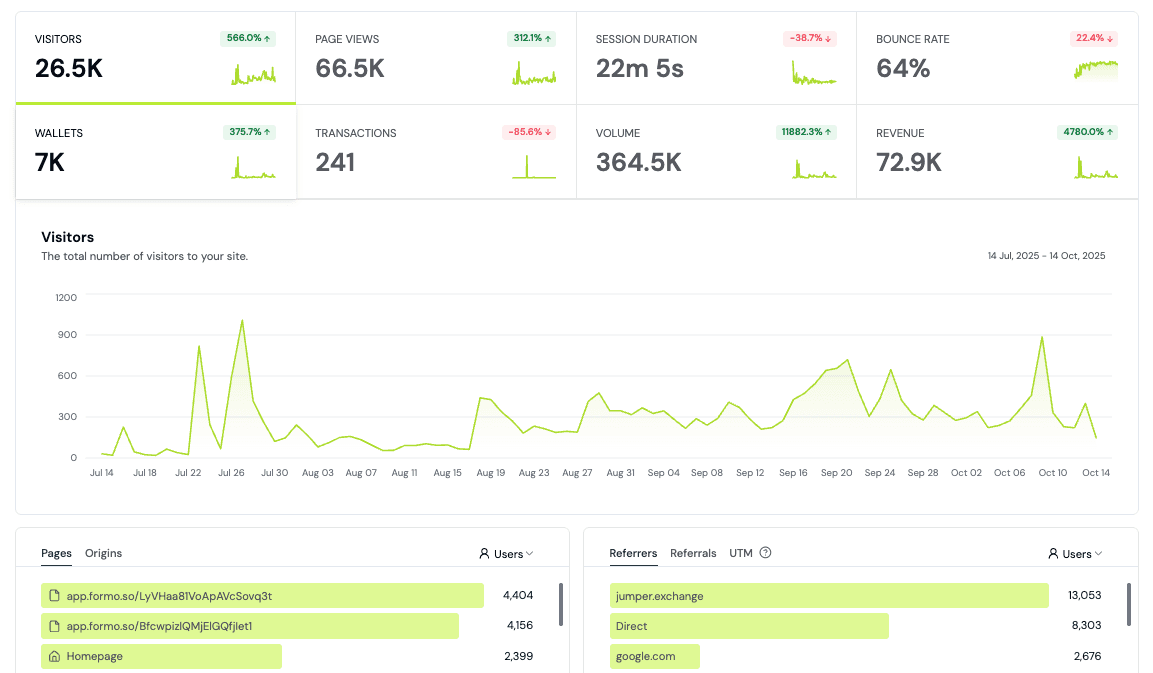
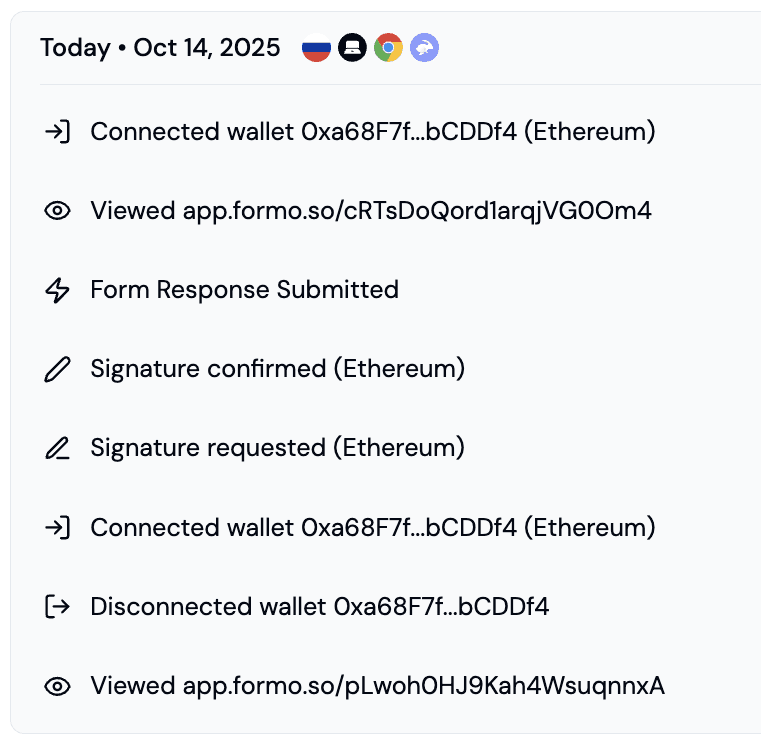
Formo makes a different bet: analytics where the user is a wallet in your app. The Formo SDK autocaptures pageviews, UTMs, referrals, wallet connects, chain switches, signatures, and transactions. Formo adds product analytics (funnels, flows, retention, cohorts), wallet profiles, and revenue tracking, so a team can measure what users do after they arrive.
Safary starts from the audience on X and works toward the app. Formo starts from the users inside the app and works back to the channels that brought them, whether those channels are X, Farcaster, organic search, referrals, or paid ads.
How Safary and Formo identify users
Safary builds unified profiles from wallet addresses, social logins (X, Discord, Google), email signups, and CSV imports of wallets, X accounts, and emails. The Safary script collects wallet connections from the website, while swaps and deposits need manual safary.track() events. Safary documents full wallet data, including balances and assets, for Ethereum.
Formo gives each visitor an anonymous visitor ID stored in a first-party cookie, then stitches that visitor to a wallet address when the wallet connects. Formo needs no social account connection: the Formo SDK autocaptures wallet connects, signatures, and transactions, and links them to the first visit and its campaign.
Each wallet in Formo gets a wallet profile with net worth, tokens, DeFi positions, labels, and onchain history across all major EVM chains and Solana. Formo also assigns lifecycle stages (New, Returning, Power user, At Risk, Churned, Resurrected), so teams can track how wallets move from first use to churn or return.
Pricing: published MAU plans vs unpublished paid plans
Formo bills by MAUs, which are unique wallet addresses with an active session. Growth is $199/month billed yearly ($249/month billed monthly) for up to 5,000 MAUs, and Scale is $399/month billed yearly ($499/month billed monthly) for up to 10,000 MAUs. Every Formo plan includes unlimited events and visitors, so wallet connects, signatures, and transactions add nothing to the bill.
Safary offers a free trial and paid plans such as Pro, but Safary does not publish prices on safary.club, and the Plans page in the Safary docs lists no rates. A Safary price needs a quote from Safary, so a direct cost comparison is not possible from public information.
On Formo, the bill stays the same as events grow and changes only as monthly active wallets grow.
Attribution: X engagement and tracked events vs autocaptured wallet activity
Safary attribution measures website conversions and paid campaign performance, and maps the path from X engagement to onchain transactions. Safary attributes tracked wallet events, such as swaps and deposits, to channels and campaigns, but those events and their amounts reach Safary only when a team sends them with safary.track(). The Safary docs do not describe cohort retention by channel or native smart contract events.
Formo marketing attribution captures UTMs, referrers, referral codes, and campaigns on the first visit and ties them to the wallet that connects. Formo offers first touch and last touch models, so teams can compare the channel that introduced a wallet with the channel that preceded its conversion.
Formo onchain attribution then reports transactions, volume, revenue, and retention by wallet for each channel and campaign. Because the Formo SDK autocaptures transactions, a team gets attribution for swaps and deposits without writing a tracking call for each one.
When Safary is the better choice
Safary is the better choice when growth depends on X audience work rather than product analytics. Pick Safary to see wallet balances, assets, and protocols used for your X followers. Pick Safary for B2B lead finding and audience quality reports for partnership talks with exchanges and investors. Pick Safary for mindshare tracking on X. Pick Safary for email and Telegram alerts when specific events happen.
Safary also fits teams that want onboarding with only an X account connection and no developer, and teams that use Safary integrations with Privy, Dynamic, Magic Link, or Kaito. Teams that import lists of wallets, X accounts, and emails by CSV for enrichment will also find that workflow in Safary.
Formo is the better fit when the team needs to measure product use: funnels, flows, retention cohorts, autocaptured transactions, and wallet profiles on all major EVM chains and Solana, tied to marketing attribution from any channel and not only from X.
Running Safary and Formo together
Keep Safary for X audience insights, B2B prospecting, and mindshare tracking, and use Formo to connect acquisition with product behavior, wallet intelligence, and revenue tracking. Run both during evaluation. Formo begins collecting new events after you install the SDK; historical Safary data will not transfer because the tools use different data models.
For a longer look at how Formo and Safary differ on attribution, wallet intelligence, and pricing, read the full comparison. Read the detailed Formo vs. Safary analysis.

Install Formo next to Safary
Add the Formo SDK alongside the Safary script. The two do not conflict, so Safary keeps tracking visits and wallet connects while Formo collects new data.

Map what you track
Formo autocaptures pageviews, UTMs, referrals, wallet connects, chain switches, signatures, and transactions. Swaps and deposits from safary.track() become transactions; recreate other custom events.